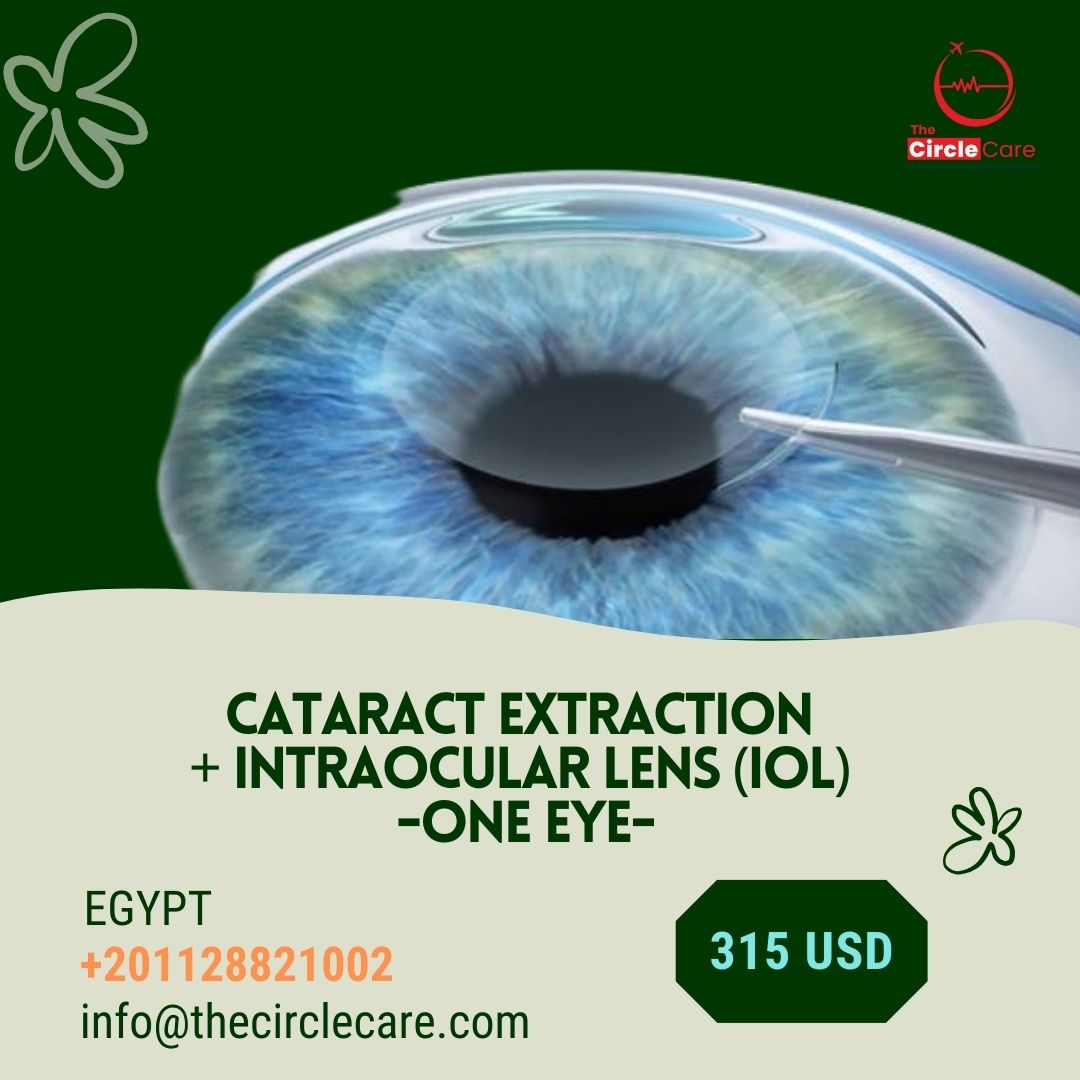
Fortunately, cataract treatment is a highly effective procedure that can restore your sight. At TheCircleCare, we specialize in providing world-class cataract surgery to help you regain clarity and independence.
Understanding Cataracts and Cataract Treatment
A cataract develops when the normally clear lens of your eye becomes cloudy. This clouding occurs due to the breakdown of proteins within the lens. Over time, the cataract can grow larger, obstructing your vision and causing symptoms like blurry vision, halos around lights, difficulty seeing at night, and faded colors.
This guide is brought to you by The Circle Care, a trusted medical facilitator helping international patients access healthcare in Egypt.
Cataract treatment involves a surgical procedure to remove the clouded lens and replace it with an artificial lens implant, known as an intraocular lens (IOL). This outpatient surgery is typically performed under local anesthesia, with minimal discomfort and a quick recovery time.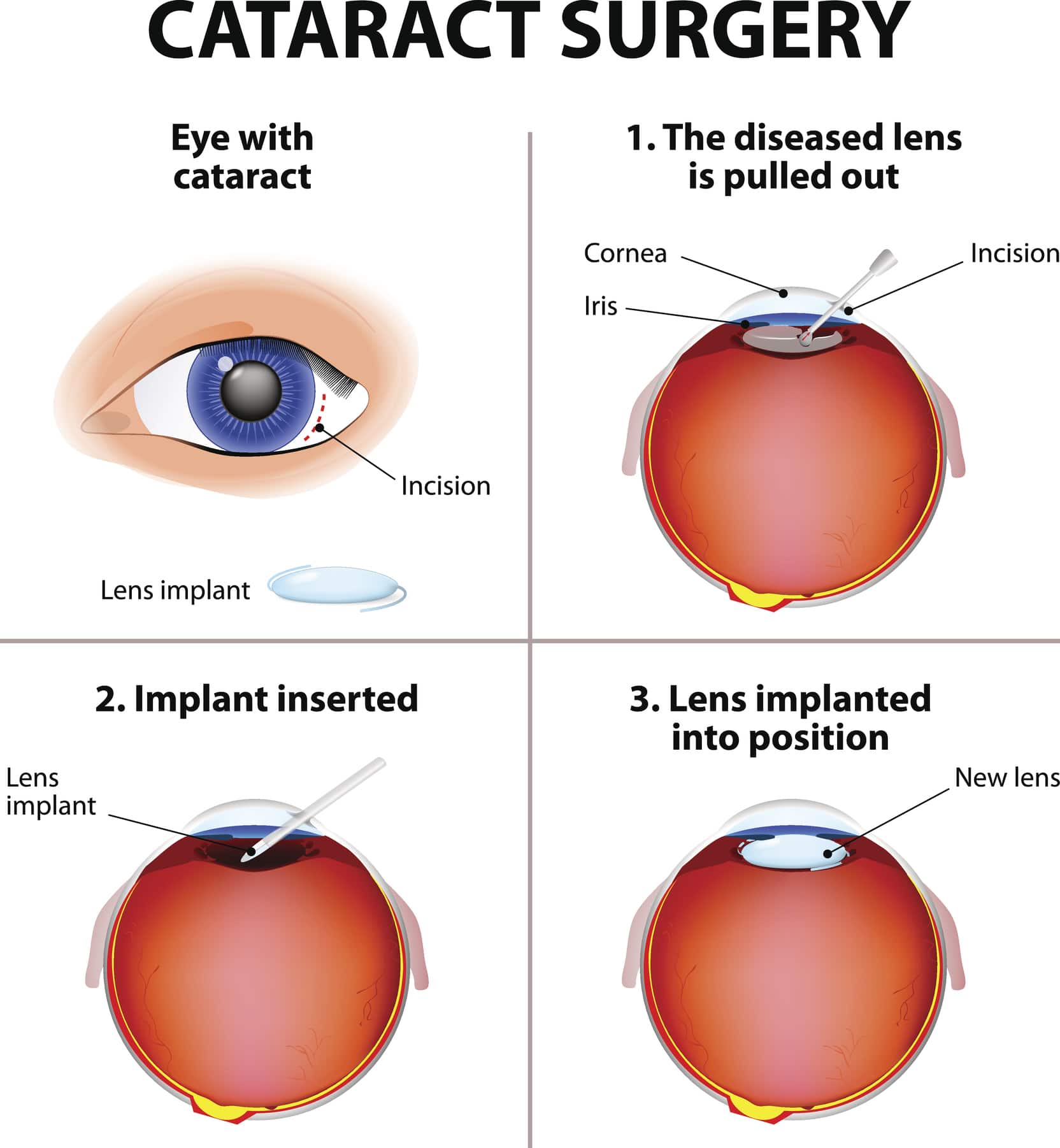
Who we are?
The Circle Care is a trusted medical facilitation platform that connects patients with Egypt’s leading hospitals, specialists, and treatment providers while offering end-to-end support throughout their healthcare journey. Explore our medical services and treatment packages to discover personalized healthcare solutions designed to make accessing quality medical care in Egypt simple, safe, and stress-free.
Benefits of Cataract Treatment
Undergoing cataract surgery offers numerous advantages, including:
- Improved vision clarity: Restore sharp, clear vision and enjoy the vibrant colors of the world around you.
- Enhanced independence: Regain the ability to perform daily tasks with ease and confidence.
- Reduced risk of falls: Clearer vision can significantly decrease the risk of accidents.
- Boosted confidence: Experience a renewed sense of self-assurance and independence.
- Potential for reduced reliance on glasses: Depending on your eye health, you may require fewer glasses or even become glasses-free after surgery.
The Cataract Treatment Process
The cataract treatment process typically involves the following steps:
- Comprehensive eye examination: Our skilled ophthalmologists conduct a thorough evaluation of your eye health to determine the best treatment approach. This includes measuring your eye’s precise dimensions to ensure the correct IOL is selected.
- Pre-operative assessment: You will undergo pre-operative tests, such as blood pressure checks and blood tests, to assess your overall health and prepare for surgery.
- Cataract surgery: Performed as an outpatient procedure, cataract surgery typically takes about 30 minutes per eye. During the surgery, the surgeon creates a small incision in the eye, removes the cloudy lens, and implants the IOL.
- Post-operative care: Our team will provide detailed instructions for post-operative care, including eye drop administration and activity restrictions. Regular follow-up appointments are essential to monitor your healing progress.
Risks and Recovery
While cataract surgery is generally safe and effective, potential risks include infection, bleeding, swelling, and the development of a secondary cataract (after-cataract). However, these complications are rare.
Most patients experience a rapid recovery from cataract surgery. You may experience some blurry vision, dryness, or mild discomfort for a few days. It’s essential to follow your surgeon’s post-operative instructions carefully to minimize the risk of complications and promote optimal healing.
Frequently Asked Questions (FAQs) About Cataract Treatment
Q: What are the symptoms of cataracts? A: Cataracts can cause a variety of symptoms, including blurry or cloudy vision, difficulty seeing at night, glare or halos around lights, faded colors, and double vision in a single eye. If you experience any of these symptoms, it’s essential to consult an eye doctor for a comprehensive evaluation.
Q: Is cataract surgery painful? A: Most cataract surgeries are performed using local anesthesia, which numbs the eye area. You may feel some pressure during the procedure, but typically no pain. After surgery, you might experience mild discomfort or eye dryness, which can be managed with prescribed eye drops.
Q: How long is the recovery time for cataract surgery? A: Recovery time varies from person to person, but most patients experience a relatively quick recovery. You may experience some blurry vision, dryness, or mild discomfort for a few days after surgery. It usually takes several weeks for your vision to stabilize completely.
Q: Will I need to wear glasses after cataract surgery? A: Whether you need glasses after cataract surgery depends on your overall eye health and the type of IOL implanted. Some patients find that they no longer require glasses for distance vision, while others may still need glasses for reading or other activities.
Q: Can cataracts come back after surgery? A: While it’s rare, it’s possible for a secondary cataract, also known as after-cataracts, to develop after cataract surgery. This occurs when the lens capsule, a thin membrane that holds the IOL in place, becomes cloudy. However, after-cataracts can be easily treated with a quick laser procedure called YAG capsulotomy.
Q: What is the success rate of cataract surgery? A: Cataract surgery has a very high success rate. Millions of people undergo cataract surgery each year with excellent results. Most patients experience significant improvement in their vision after surgery.
Q: How can I prepare for cataract surgery? A: To prepare for cataract surgery, you may need to avoid certain medications, such as blood thinners, for a specific period before the procedure. Your surgeon will provide detailed instructions on how to prepare for surgery. It’s essential to follow these instructions carefully to ensure a successful outcome.
Q: What is the cost of cataract surgery? A: The cost of cataract surgery can vary depending on several factors, including the type of IOL chosen, the surgeon’s fees, and the facility where the surgery is performed. It’s recommended to contact your insurance provider to understand your coverage and potential out-of-pocket costs.
Q: Can cataracts be prevented? A: While there’s no guaranteed way to prevent cataracts, maintaining overall eye health can help reduce your risk. This includes regular eye exams, wearing sunglasses to protect your eyes from harmful UV rays, quitting smoking, and managing underlying health conditions like diabetes.
Contact Us Today
If you would like to learn more about the cost of medical treatment in Egypt, receive a personalized medical consultation, or need assistance choosing the right hospital and specialist, the The Circle Care team is here to support you every step of your healthcare journey.
You can contact us directly via WhatsApp for a quick consultation and answers to all your questions regarding treatment options, accommodation, medical appointments, and healthcare services.
To explore the average costs of medical procedures and treatments in Egypt, please visit our Medical Price List in Egypt.
Our Partner Hospitals and Medical Centers
The Circle Care collaborates with a carefully selected network of leading hospitals and medical centers across Egypt to provide local and international patients with access to high-quality healthcare services. Our partners include private, public, military, and specialized healthcare institutions recognized for their medical expertise, advanced technology, and commitment to international standards of patient care.
Featured Hospital Partners
- Air Force Specialized Hospital
One of Egypt’s leading military hospitals, located in New Cairo, offering advanced diagnostic, medical, and surgical services across multiple specialties using state-of-the-art medical technology.
- New Cairo Hospital – Ministry of Interior Medical Services Sector
A distinguished healthcare facility providing comprehensive medical and diagnostic services as part of the Ministry of Interior’s Medical Services Sector.
- Town Hospital
A modern private hospital offering multidisciplinary healthcare services through a team of experienced consultants and specialists, with a strong focus on quality care and patient safety.
- Sheikh Zayed Specialized Hospital
One of Egypt’s leading tertiary referral hospitals, affiliated with the Specialized Medical Centers Organization, providing advanced healthcare services across a wide range of medical and surgical specialties.
- Baheya Foundation & Hospital
A leading non-profit institution dedicated to the early detection and treatment of breast cancer, offering comprehensive women’s healthcare services based on internationally recognized treatment protocols.
Additional Services
1. Egypt Entry Visa Support
We help international patients prepare for their medical journey by providing guidance on travel requirements and Egypt’s visa application process, ensuring a smooth and hassle-free arrival before treatment begins.
Apply through the official Egypt e-Visa Portal.
2. Medical Fellowships & Professional Training
At The Circle Care, our support extends beyond patient coordination. We also assist physicians and healthcare professionals seeking to advance their careers through clinical fellowships, postgraduate education, and specialized training programs at Egypt’s most prestigious medical institutions.
Leading Academic Institutions
- Kasr Al Ainy Faculty of Medicine – Cairo University
One of the oldest and most prestigious medical schools in the Middle East, offering a wide range of postgraduate degrees, clinical fellowships, and medical training programs.
- Egyptian Fellowship Board
The official authority under Egypt’s Ministry of Health and Population responsible for accredited Egyptian Fellowship programs, providing structured postgraduate medical training that meets high professional standards.